
Loading experience...
Loading experience...

Experience beautiful chamber music with OM & Friends in a concert featuring celebrated string quartets by Borodin and Dvořák. This program presents two masterpieces of the string quartet repertoire, known for their expressive melodies, rich harmonies, and distinctive musical character. An elegant and engaging concert for both classical music lovers and new listeners.
payment via bank transfer THB 750 (incl. glass of wine)
cash at entrance THB 1,000 (incl. glass of wine)
January 23, 2026, 04:30 PM
-
Hua Hin Events
476 Moo 1 Soi Porn Sawan, Hin Lek Fai, Hua Hin, Prachuap Khiri Khan 77110, Thailand
THB 750
Borodin – String quartet no.2 in D major
The String Quartet No. 2 is a
in D major written by
in 1881. It was dedicated to his wife Ekaterina Protopova. Some scholars, such as Borodin’s biographer Serge Dianin, suggest that the quartet was a 20th anniversary gift and that it has a
evoking the couple’s first meeting in
. Of its four movements, the third movement “Notturno” is the most famous.
Borodin wrote the string quartet quickly while staying at the estate of his friend, the composer
, which was located in Zhitovo, southeast of
. Borodin also composed the
In the Steppes of Central Asia
the same year. The quartet premiered in that year or the next.
Dvořák – American Quartet
The String Quartet No. 12 in F major,
96 (
179), nicknamed the American Quartet, is the twelfth
composed by
. It was written in 1893, during Dvořák’s time in the United States. The quartet is one of the most popular in the chamber music repertoire.
Dvořák composed the quartet in 1893 during a summer vacation from his position as director (1892–1895) of the
in New York City. He spent his vacation in the town of
, which was home to a
immigrant community. Dvořák went to Spillville through Josef Jan Kovařík. Kovařík had finished violin studies at the Prague Conservatory and was about to return to Spillville—his home in the United States—when Dvořák offered him a position as secretary. When Josef Jan accepted, he went to live with the Dvořák family in New York. He told Dvořák about Spillville, where his father Jan Josef was a schoolmaster, leading Dvořák to spend the summer of 1893 there.
Dvořák sketched the quartet in three days and completed it in thirteen more days, finishing the score with the comment “Thank God! I am content. It was fast.” It was his second attempt to write a quartet in F major: his first effort, twelve years earlier, produced only
. The American Quartet proved a turning point in Dvořák’s chamber music output: for decades he had toiled unsuccessfully to find a balance between his overflowing melodic invention and a clear structure. In the American Quartet it finally came together. Dvořák defended the apparent simplicity of the piece: “When I wrote this quartet in the Czech community of Spillville in 1893, I wanted to write something for once that was very melodious and straightforward, and dear
kept appearing before my eyes, and that is why it all turned out so simply. And it’s good that it did.”
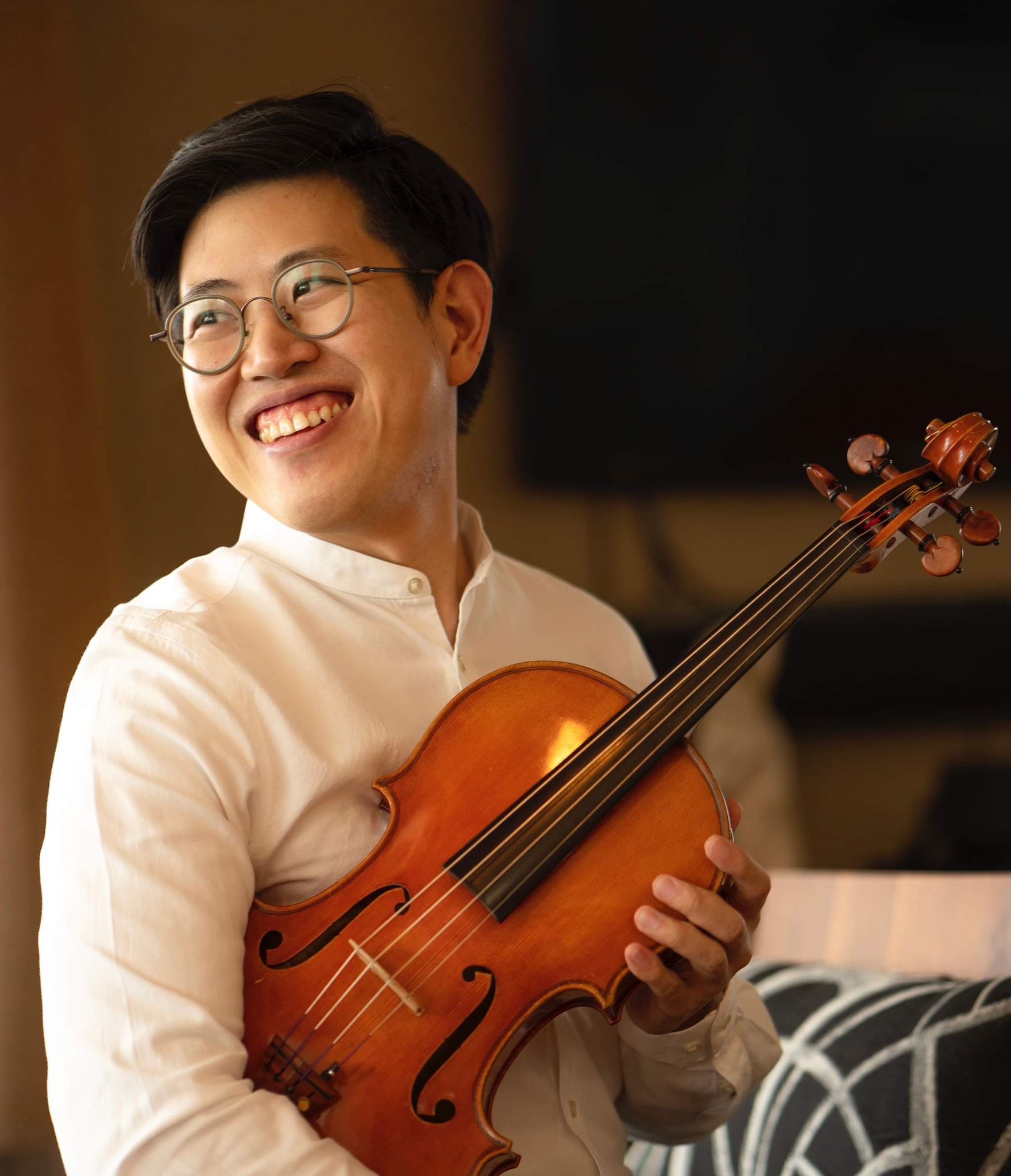
Viola
Miti Wisuthumporn has forged a career as one of the leading violists of his generation in Thailand, performing on international concert stages, commissioning and recording new works, and nurturing young musicians. Currently a principal violist of the Royal Bangkok Symphony Orchestra, Miti received reviews such as “Miti played the central section’s exposed solo with admirable nerve and control.”(Bangkok Post). His appearances as concert soloist have included the Royal Bangkok Symphony Orchestra, the Pro Musica and the Chulalongkorn University String Orchestra. As a chamber musician, he has collaborated with the members of the Pro Musica, Bangkok String Quartet, as well as Andres Cardenes, Thomas Hampson, Clive Greensmith, Roeland Hendrikx and many others.
Dedicated to introducing classical music to a broader audience in Thailand, Miti worked with five fellow musicians to form the JEEB Ensemble. The ensemble sought to present core classical music repertoire in funky ways that reached a wider audience. It proved to be popular – the JEEB Ensemble held sold-out music festivals in 2013 and 2017, had a China tour in 2018, launched Thailand’s first digitally-streamed classical music album distributed by Universal Music amidst COVID-19, and will soon launch its third festival.
Miti began violin studies at age 14 and switched to the viola at the age of 15 while studying with Ajarn Chaiwat Buranamanas and the National Artist Asst Prof Col Choochart Pitaksakorn. From 2014 to 2008, he received a full-scholarship to study at the Yong Siew Toh Conservatory of Music, National University of Singapore under the tutelage of Jiri Heger, and between 2008 and 2010, received a full-scholarship to complete master degree at the Carnegie Mellon University in Pittsburgh, where he studied with distinguished American violists –Toby Appel, Joen Vasquez and Maureen Gallargher. Later he moved to Europe for further studies with Matthias Maurar, former viola soloist of the Royal Concertgebouw Orchestra at the University of Music and Performing Art Graz, Austria.
Miti is currently a viola lecturer at the Faculty of Fine and Applied Arts and Faculty of Music Education – Chulalongkorn University, Faculty of Humanities – Kasetsart University and Princess Galyani Vadhana Institute of Music.
This event has now taken place or the registration period has expired.
You can therefore no longer register.
Proudly Sponsored By:

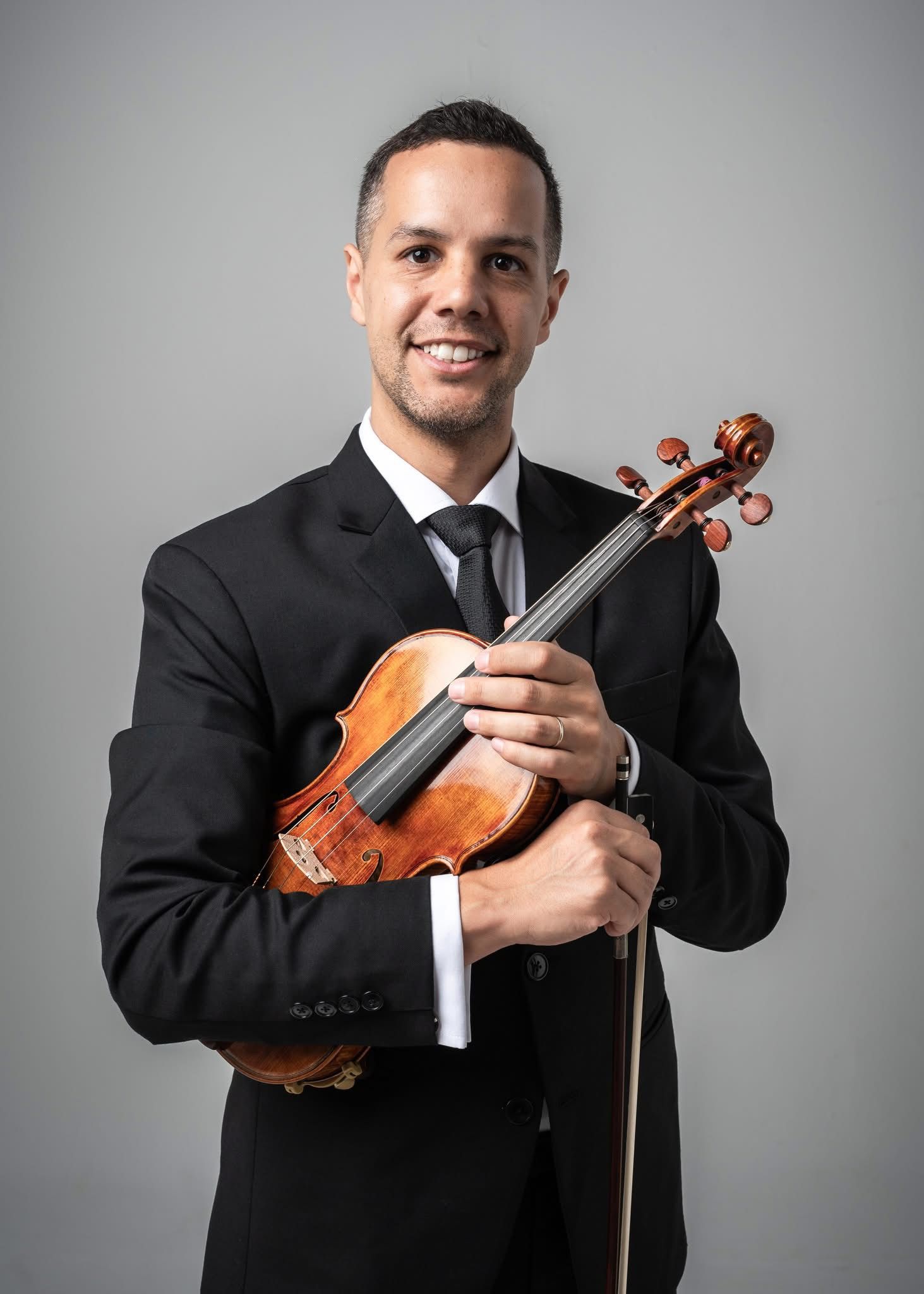
Violin
Graeme Norris is the Principal 1st Violin of the West Australian Symphony Orchestra. Previously, he held leadership roles with the Adelaide Symphony Orchestra and the Malaysian Philharmonic Orchestra. He has also performed as a guest principal with orchestras in Singapore and Tasmania.
A native of Melbourne, Graeme holds a Bachelor of Music Performance and attended the Australian National Academy of Music on a full scholarship. As a soloist and chamber musician, he has performed extensively across Australia, New Zealand, and Asia. He has also appeared as a soloist with orchestras in Melbourne, Adelaide, and Malaysia.
In addition to his performance career, Graeme lectures at the Western Australian Academy of Performing Arts (WAAPA) and has taught at several other universities and youth orchestras. Outside of music, he enjoys travel, photography, and finding a good cup of coffee.
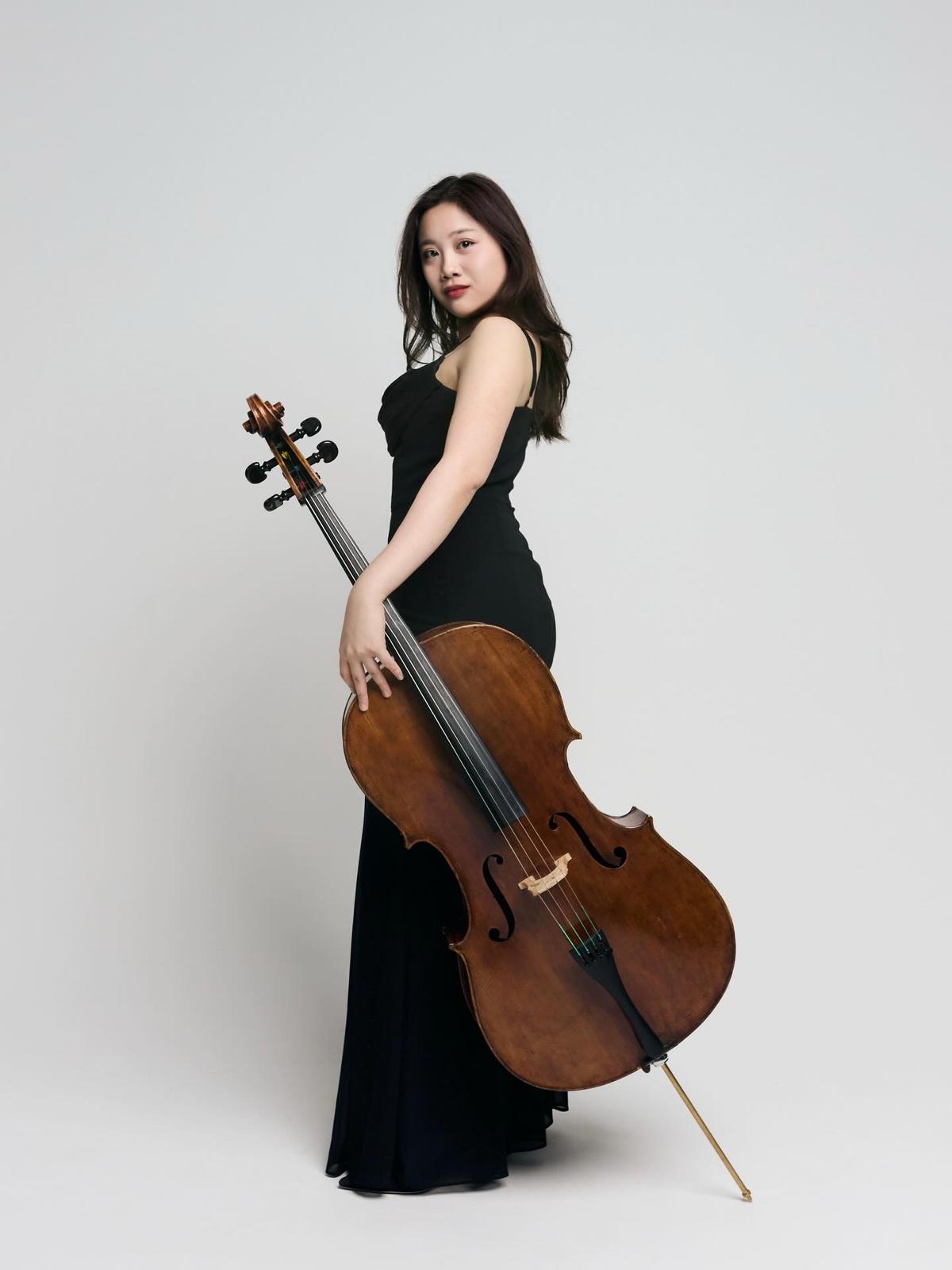
Cello
Born in 2001, began her cello journey at the age of seven and quickly became a rising figure in the classical music scene. In 2015, she earned a prestigious scholarship to study in the Virtuoso Program with the Orchestra da Camera in the United States of America. This opportunity launched her onto an inspiring path that later led to a scholarship for her Bachelor’s degree at the San Francisco Conservatory of Music, where she studied under the world-renowned French cellist and pedagogue Jean-Michel Fonteneau.
Kesara’s artistry has been shaped through masterclasses and collaborations with musicians such as Midori Goto, Yo-Yo Ma, Michael Tilson Thomas, Zuill Bailey, Gustav Rivinius, Daniel Rowland, and Richard Lester. In 2025, she graduated from the Royal College of Music with a master’s degree, studying with acclaimed cellist Alexander Boyarsky. Most recently, she won first prize in the San Francisco International Young Artist Competition in November 2025. Beyond her solo career, Kesara is a founding member of the Asterios Trio, who has been invited to perform at prestigious venues at the Royal Albert Hall, St James’s Piccadilly, and the Banstead
Arts Festival. She is also passionate about historical performance, studying Baroque Cello and Viola da Gamba with Elisabeth Reed and having worked with Jérôme Hantaï. In addition to her performance career, Kesara is actively involved in performance science research through her master’s research at the Centre for Performance Science, a collaboration between the Royal College of Music and Imperial College London. Her recent research explores the effects of virtual reality simulators in performing classical musicia
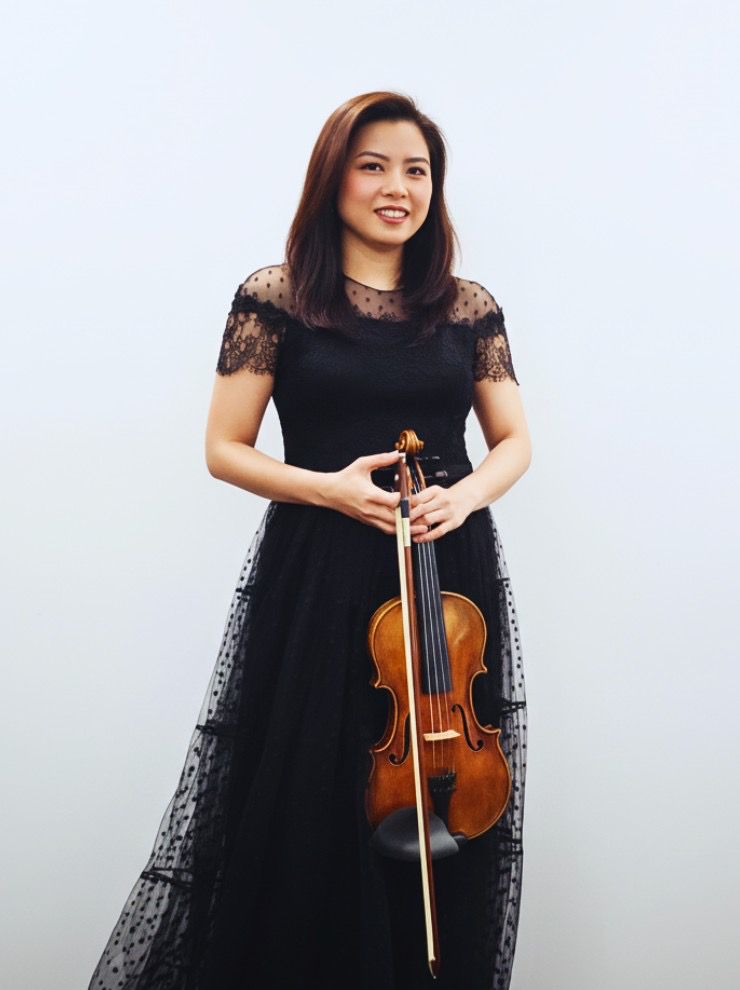
Violin
Omporn Kowintha began her violin lessons with Prof. Choochart Pitaksakorn at the age of thirteen. She participated in the Thai Youth Orchestra and became its concertmaster from 1994 to 1996. In 1997, she earned her Bachelor’s Degree with Honors in Music Education from Chulalongkorn University. From 1998 to 1999, she received a scholarship from the Hong Kong Academy for Performing Arts, which enabled her to study with Michael Ma. In 2000, Omporn went to the United States, where she studied violin with Kathryn Lucktenberg and Fritz Gearhart at the University of Oregon. During this time, she also studied Suzuki Violin Pedagogy with Shelley Rich and worked as a violin instructor in the Suzuki Program at the Community Music Institute of the University of Oregon. She received her Master’s Degree in Violin Performance and Pedagogy in 2003.
Performing on both violin and viola, Omporn has participated in many chamber music ensembles and orchestras in Thailand, including the Glom Piano Quartet, Bangkok String Quartet, the Artist Ensemble of Bangkok, and Pro Musica Orchestra. She also founded her own chamber music series, “Om and Friends,” which has presented regular chamber music concerts since 2018. In addition, she is one of the most sought-after violin instructors in Thailand. Omporn founded the first Suzuki Studio in Thailand, called “Omri Music Studio,” and is a founding board member of the Thailand Association for Talent Education.